

.
Watergate Bay
January 2026
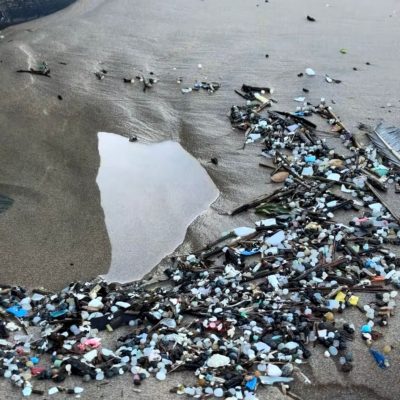
Watergate Bay is one of Cornwall’s wildest and most beloved coastlines. However, the same open Atlantic geography that makes it a magnet for tourists and sea lovers, also makes it a magnet for something far less welcome. The Bay’s exposed north-facing position means it intercepts plastic carried on ocean currents from thousands of miles away, concentrating microplastics along its shoreline.
In January, Nurdle was commissioned to deploy our specialist vacuum equipment and clean the beach. Over 3 days, the team worked the length of the bay, removing plastic that would otherwise have continued fragmenting into smaller pieces.
A First for Science
Students from the University of Plymouth partnered up with us along the coastline to help clean, which amazingly has led to the UK’s first scientific study into microplastic return rates. This measures exactly how much plastic washes back onto a cleaned beach with each new tide.
This research matters enormously. Until now, scientists and policymakers have had no reliable data on how quickly microplastics return to a beach after removal, making it almost impossible to plan effective, long-term cleanup strategies. By cleaning Watergate Bay to a known baseline and then monitoring what comes back with every tide, we can begin to put real numbers on the scale of the problem for the very first time.
The findings will be of significant importance to the global scientific community. Not just for understanding Watergate Bay, but for understanding every polluted beach on the planet.


.